2008/04/20

Extract from the Thoughts of Emperor Marcus Aurelius Antoninus
Book IV, 31-33


31. Love the art, poor as it may be, which thou hast learned, and be content with it; and pass through the rest of life like one who has intrusted to the gods with his whole soul all that he has, making thyself neither the tyrant nor the slave of any man.

32. Consider for example, the times of Vespasian. Thou wilt see all these things, people marrying, bringing up children, sick, dying, warring, feasting, trafficking, cultivating the ground, flattering, obstinately arrogant, suspecting, plotting, wishing for some to die, grumbling about the present, loving, heaping up treasure, desiring consulship, kingly power. Well, then, that life of these people no longer exists at all. Again, remove to the times of Trajan. Again, all is the same. Their life too is gone. In like manner view also the other epochs of time and of whole nations, and see how many after great efforts soon fell and were resolved into the elements. But chiefly thou shouldst think of those whom thou hast thyself known distracting themselves about idle things, neglecting to do what was in accordance with their proper constitution, and to hold firmly to this and to be content with it. And herein it is necessary to remember that the attention given to everything has its proper value and proportion. For thus thou wilt not be dissatisfied, if thou appliest thyself to smaller matters no further than is fit.

33. The words which were formerly familiar are now antiquated: so also the names of those who were famed of old, are now in a manner antiquated, Camillus, Caeso, Volesus, Leonnatus, and a little after also Scipio and Cato, then Augustus, then also Hadrianus and Antoninus. For all things soon pass away and become a mere tale, and complete oblivion soon buries them. And I say this of those who have shone in a wondrous way. For the rest, as soon as they have breathed out their breath, they are gone, and no man speaks of them. And, to conclude the matter, what is even an eternal remembrance? A mere nothing. What then is that about which we ought to employ our serious pains? This one thing, thoughts just, and acts social, and words which never lie, and a disposition which gladly accepts all that happens, as necessary, as usual, as flowing from a principle and source of the same kind.

Emperor Marcus Aurelius Antoninus
To Himself (Τὰ εἰς ἑαυτόν),
trans. George Long (1862), ed. E. Ginn
[WikiSource]

2008/04/19

Evagrius Scholasticus, Ecclesiastical History, IV, XXXII:


Justinian I
Justinianus I
Ιουστινιανός I

"There was also another quality latent in the character of Justinian, a depravity which exceeded any bestiality which can be imagined; and whether this was a defect of his natural character, or whether it was the outgrowth of cowardice and fear, I am unable to say, but in any case it manifested itself as a result of the popular Nika Insurrection. For he seemed to be absolutely devoted to one of the two Factions, the Blues namely, and to such a degree that these actually used to murder their opponents in cold blood in broad daylight and in the middle of the city, and not only did they suffer no penalty, but they actually were counted worthy of prizes of honour. And they were permitted even to enter houses and to gather as plunder the valuables therein and to force the inhabitants to pay for their own lives. And if any of the magistrates tried to stop them, he thereby endangered his own life. Thus, for instance, a certain man administering the government of the East, because he disciplined with stripes some of the unruly element, was himself flogged in the very middle of the city and roughly handled. And Callinicus, the Governor of Cilicia, because he inflicted the punishment of the law upon two Cilician murderers, Pautus and Faustinus, who had assaulted him and made an attempt upon his life, was impaled, thus paying the penalty for his correct judgment and his support of the laws. Consequently the members of the opposite Faction went off into exile, and being received by no one at all, but being driven away from every place like polluted creatures, they proceeded to waylay travellers, both robbing and murdering them, so that every place was full of violent deaths and highway robbery and the other sorts of crime. Occasionally too he went over to the opposite side and began to destroy them, allowing the laws which he had abandoned to run riot through the cities like barbarians. And to tell of all these matters in detail, neither words nor time would suffice; yet these examples are sufficient to furnish evidence for all the rest."

Evagrius Scholasticus (also known as Epiphaneia, Ex-Præfectus)
Ecclesiastical History, IV, XXXII -
[Tertulian | WorldCat ]
A younger contemporary of Procopius and of Justinian (c. 536‑594)

Cp. Procopius, The Secret History,
tr. by Richard Atwater (1927) [Sacred-Texts]
[WikiSource]

2007/11/11

The Egyptian priests told Solon many things1, that must have humbled his Athenian pride of superior knowledge; but one fact that they told him, on geography, is so curious, in regard to the "far West," that it is worthy of mention.
"We know the maritime abilities of the Phoenicians [Hellenes], and we can adduce tangible reasons to show, that, by orders of Pharoh Necho, Africa had been circumnavigated, and the Cape of Good Hope, about 600 BC, actually doubled, before it was in the year 1497 of our era, discovered by Diaz and Vasco de Gama.
The Egyptians had intercourse with Hindostan, the Spice Islands, and China, long before that period [...]

Gliddon, R. George (pg. 14). Ancient Egypt, Philadelphia: T. B. Peterson. Jan. 1848.
ASIN: B000XDKJRI
OCLC: 69210924
[WorldCat]
Google Books

Compare with http://en.wikipedia.org/wiki/Seres

...Which incidentlaly highlights what Alexander (from Plutarch) meant by "[I] desire that victorius Hellenes should dance again in India and revive the memory of the Bacchic revels among the savage mountain tribes beyond the Kaukasos."

2007/11/10

Тофалария


Sveshnikov Alexander provides us with charming examples of Central Asia so often overlooked by Western travellers. Тофалария (Tofalariya, near to Lake Baikal).

2007/11/02

Athena & Poseidon


Illustration from a lithograph by Kaeppelin et Cie., ca. 1840.)
From a vase by Amasis (Athenian potter and painter, 6th century BC - not to be confused with King Amasis of Sais.)

Poseidon has words with a recalcitrant Athena. I am reminded here of the brief history taught by Sonchis from Sais to Solon from Athens in respect of the destruction of Athens by floods. But, that is a story for another day.

2007/09/30

Achilles dragging the body of Hector


P21.4 ACHILLES DRAGGING THE BODY OF HECTOR

Museum Collection: Museum of Fine Arts, Boston, Massachusetts, USA
Catalogue Number: Boston 63.473
Beazley Archive Number: --
Ware: Attic Black Figure
Shape: Hydria
Painter: Attributed to the Antiope Group
Date: ca 520 - 510 BC
Period: Archaic

SUMMARY

Side: In scenes from books 22 and 23 of Homer's Iliad, Iris, the winged messenger of the gods, descends to Troy to instruct King Priamos to ransom the body of his son Hektor from Akhilleus. The Greek hero in the painting drags the corpse of the Trojan prince around the tomb of Akhilleus, whose spirit, depicted as a tiny winged man, flits overhead. Old Priamos and his wife Hekabe stand in the palace. The striding warrior before them is perhaps Hermes in the guise of a Myrmidon warrior, ready to lead the king to the Greek camp.
Shoulder: Herakles battles Kyknos (not shown).

http://www.theoi.com/Gallery/P21.3.html

2007/09/26

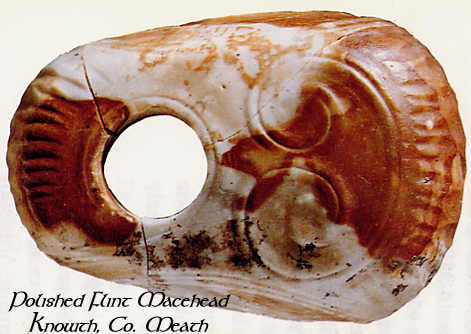
Koru &c [speculative]

...... The koru used by the Kiwis...

.......and reclaimed by contemporary artists...

has its roots in, at least, the 1st Millenium BC...
....as evidenced by this bronze tripod vessel for food from the Shang dynasty, 1300-1050 BC.
M. 60-1953, V & A, London.

A similar design is present in the 3rd Millenium BC on a macehead found in Knowth,

2007/09/18

Haile Selassie I addresses university


"[...] leadership developed here should be guided by the fundamental values and moral power which have for centuries constituted the essence of our religious teachings [...] Discipline of the mind is a basic ingredient of genuine morality and therefore of spiritual strength. Indeed, a university, taken in all its aspects, is essentially a spiritual enterprise which, along with the knowledge and training it imparts, leads students into more wise living and a greater sensitivity to life's responsibilities [...]"

"These young people face a world beset with the most effectively organised programme of deceptive propaganda and of thinly screened operations ever known; [...]"

Haile Selassie,
Convocation of Haile Selassie I University
December 19th, 1961

Selected Speeches of Haile Selassie I, 1918-1967
[One Drop Books] [WorldCat]

2007/09/16

Einstein notices the source of knowledge

Dr. Einstein told Niccolo Tucci, who interviewed him for the New Yorker (November 22, 1948). Learning that the physicist spent an hour each evening reading aloud in Sophocles, Thucydides, and Aeschylus, Tucci remarked, "So you too, Herr Professor, have gone back to the Greeks?" Einstein replied:
"But I have never gone away from them. How can an educated person stay away from the Greeks? I have always been far more interested in them than in science."
See also letters from Albert Einstein to Constantinos Karatheodori and ensuing debate held in New York in 1992 by members of Imperial College over provenance of theory of relativity.

2007/09/14

Hence we will not say that Greeks fight like heroes, but that heroes fight like Greeks.
Sir Winston Churchill

Historical justice forces me to admit that among all the enemies who stand against us, the Greek soldier above all, fought with the most courage. He surrendered himself only when the continuation of resistance was not possible any longer, and when he had no reason not to.

Adolph Hitler
Reichstag, 4 May 1941

2007/09/12

ManyEyes


2007/09/10

BBC not denying Vatican holds Byzantine texts.

Exploring hundreds of years of history, Richard Hammond embarks on an entertaining travelogue examining the popular and enduring myths and legends surrounding the Holy Grail.

Thought by many to be the very cup from which Jesus drank at the Last Supper, the Holy Grail has haunted public imagination for centuries but left many unanswered questions. Does the Grail exist or not and what exactly is it?

Richard Hammond and the Holy Grail (BBC ONE) is an intriguing 5,000- mile journey to find out.

It is a quest that takes Richard to ancient scrolls in the Vatican's secret archive; medieval knights and hidden treasure in the South of France; Hitler's search for the Grail; holy relics in Constantinople; a psychic in Scotland; a crop circle symposium in Glastonbury; and to Paris where he explores the latest Grail fever phenomenon.

He poses the question: why are so many people intrigued by the Grail and why does it hold such enchantment?

[....] http://www.bbc.co.uk/pressoffice/pressreleases/stories/2006/01_january/20/grail.shtml

2007/09/08

Alexander the Great recounting past link with India.

If it were not my purpose to combine barbarian things with things Hellenic, to traverse and civilise every continent, to search out the uttermost parts of land and sea, to push the bounds of Macedonia to the farthest Ocean, and to diseminate and shower the blessings of the Hellenic justice and peace over every nation, I should not be content to sit quietly in the luxury of idle power, but I should emulate the frugality of Diogenes. But as things are, forgive me Diogenes, that I imitate Herakles, and emulate Perseus, and follow in the footsteps of Dionysos, the divine author and progenitor of my family, and desire that victorius Hellenes should dance again in India and revive the memory of the Bacchic revels among the savage mountain tribes beyond the Kaukasos.

On the Fortune of Alexander
Plutarch
, 332 a-b

2007/09/05

Evolution of deception


[Rutgers/Trivers] [WorldCat]

Play speech by Robert Trivers ("What do we know?"):


| Download MP3 | Help | Pop!Tech 2005 |

Stop SPP Protest - Union Leader stops provocateurs


Follow up.


LEX VISIGOTHORUM III, 3, 1. [A.D. 654]

III. TITULUS: DE RAPTU VIRGINUM VEL VIDUARUM
I. ANCIENT LAW

If any freeman should carry off a virgin or widow by violence, and she should be rescued before she has lost her chastity, he who carried her off shall lose half of his property, which shall be given to her. But should such not be the case, and the crime should have been fully committed, under no circumstances shall a marriage contract be entered into with him; but he shall be surrendered, with all his possessions, to the injured party; and shall, in addition, receive two hundred lashes in public; and, after having been deprived of his liberty, he shall be delivered up to the parents of her whom he violated, or to the virgin or widow herself, to forever serve as a slave, to the end that there may be no possibility of a future marriage between them. And if it should be proved that she has received anything from the property of the ravisher, on account of her injury, she shall lose it, and it shall be given to her parents, by whose agency this matter should be prosecuted. But if a man who has legitimate children by a former wife should be convicted of this crime, he alone shall be given up into the power of her whom he carried off; and his children shall have the right to inherit his property.

specialised roubaix

2007/09/04

perceptual edge

We are overwhelmed by information, not because there is too much, but because we don't know how to tame it. Information lies stagnant in rapidly expanding pools as our ability to collect and warehouse it increases, but our ability to make sense of and communicate it remains inert, largely without notice.

Computers speed the process of information handling, but they don't tell us what the information means or how to communicate its meaning to decision makers. These skills are not intuitive; they rely largely on analysis and presentation skills that must be learned.

Perceptual Edge focuses on the tools and techniques of visual business intelligence to help you make better use of your valuable information assets.

Antiphon on human nature.

"[Those born of illustrious fa]thers we respect and honour, whereas those who come from an undistinguished house we neither respect nor honour. In this we behave like barbarians towards one another. For by nature we all equally, both barbarians and Greeks, have an entirely similar origin: for it is fitting to fulfil the natural satisfactions which are necessary to all men: all have the ability to fulfil these in the same way, and in all this none of us is different either as barbarian or as Greek; for we all breathe into the air with mouth and nostrils…"

Antiphon of Rhamnus (B.C. 480-411)
Quoted in Untersteiner, p. 252

The astute will rightly appreciate the precedence of Antiphon (ironically executed for supporting the anti-democratic coup of B.C. 411) whose observation underlies those formed by Hobbes, Locke, Rousseau and the US Declaration of Independence among others.